Showing posts with label Arc review. Show all posts

Wednesday, February 17, 2016

REVIEW (well, sort of): Salt to the Sea - Ruta Sepetys

*COURTESY OF NETGALLEY*

I will never get tired of reading historical fiction. Just when you think you've read enough on WWII from all angles, a book like this comes along and nudges you to look even closer to see things your so-called experienced eyes have missed.


Sepetys says that 'stories of strength through struggle' inspire her work, especially since she's the daughter of a refugee. That's what birthed this book - a successor to her Between Shades of Gray; the book that introduced me to this phenomenon that is her. She wants the world to know and remember what layers of debris resulting from the more flamboyant historical fallout, have hidden underneath and I am very much smitten with her for it.


I admit my shameful ignorance of the Wilhelm Gustloff and thank Sepetys for remedying it. But the truth is that that's not what shocked me the most in this book. What truly horrified me was not the sheer scale of the atrocity, but the less flashy, more relatable kinds of horrors, like - 


Or this - 


But I'm jumping ahead of myself. This book follows the lives of a very interesting motley of refugees. And that of one psychopath-in-training,


Initially, I was mightily creeped out by Alfred's POV accounts and dreaded his chapters. I kept questioning its purpose throughout the book and it was only towards the end that it struck me that even he needs a voice. It's not enough psychopaths like him and Hitler roared all they liked on radios and megaphones - we need to know what really went inside their heads where they were held captives so that we can give them our pity.

But back to Joana and Florian and Emilia and the Shoe Poet and the Orphan Boy and Eva and Ingrid. This is where the book triumphs in the story it is trying to tell. When humanity shines through even when all else is lost. 

So even after I've waxed eloquent about this book, I feel like I'd be lying if I won't admit that I didn't love this book to pieces like I prophesied to myself. I had the same problem with BSoG. The endings of both books left me mildly dissatisfied. This pretty much feels like blasphemy, but I'm missing out on the magic Sepetys did with Out of the Easy. Maybe she felt a pressured need to give justice to the characters in BSoG and SttS and not offend in any way, but I sense a restraint in her writing in this book, unlike in OotE. I don't want to sound pretentious - there's a 150% chance I'm wrong - I was just going out on a limb here.

The last paragraph is a personal opinion; you probably won't find it anywhere else. There's a 150% chance you'll love this book to pieces though.

VERDICT: 4 stars

Friday, April 3, 2015

ARC REVIEW: The Merit Birds - Kelley Powell


*COURTESY OF PUBLISHER VIA NETGALLEY*

 Eighteen-year-old Cam Scott is angry. He's angry about his absent dad, he's angry about being angry, and he's angry that he has had to give up his Ottawa basketball team to follow his mom to her new job in Vientiane, Laos. However, Cam's anger begins to melt under the Southeast Asian sun as he finds friendship with his neighbour, Somchai, and gradually falls in love with Nok, who teaches him about building merit, or karma, by doing good deeds, such as purchasing caged "merit birds." Tragedy strikes and Cam finds himself falsely accused of a crime. His freedom depends on a person he's never met. A person who knows that the only way to restore his merit is to confess. "The Merit Birds" blends action and suspense and humour in a far-off land where things seem so different, yet deep down are so much the same.

This is my fourth attempt at an introductory paragraph for this post. I am literally clueless about where to start. Should I begin with how impressed I was with the writing? How Powell was able to capture that which makes us all human and encase it with words, plop them down in circumstances we possibly couldn’t understand, slap them with some names and introduce them to us as her characters? How, towards the end, this book became something larger, something much beyond what I expected?

(I can hear the fridge humming as I sit and stare at the blinking cursor that seems to mock at the sudden deficiency of my virtual loquacity. No, seriously, what has happened to me? There is every possibility that it’s because it’s been inexcusably long since I last wrote anything resembling a book review. That said, I’ll still shamelessly throw in my regular excuse: college life is screwing with me.)

I have read books set in places, casting people geographically, ethnically, and culturally contrasting to the author’s. While most of them treaded upon that road which was less travelled by, they did so with a sense of caution. They knew how they were susceptible to errata, and how they could multiply in terms of consequence, however meticulous their data collection might have been. And so the tragedy remained that the audience could never fully get under the layers of the characters. Books starring POC characters became the sort of thing that you had on GR shelves labelled POC and as a bullet point in Diversity In Books campaigns. This book is that rare book that goes the whole way FLAWLESSLY. I won’t pretend I know the mechanics of how Laos and its people run (I don’t) – but I could immediately relate to the characters, being Asian myself.  How Seng was fascinated by America – land of the rich, home of Hollywood. Or the picture of it in his mind. How the locals immediately resorted to head-shaking and frowning when they see a boy and a girl together. How Lao guys don’t think too much before throwing an arm around another guy’s neck. How two members of a family don’t see shame in sharing a bed together. How an individual puts his family before himself. How they can’t understand why the white-skinned people would dry-wipe their asses after having a crap. All little things, especially in the way these facts are thrown in the readers’ faces like a careless inconsequential detail. But they went a long way in defining those tricky edges of the characters.
This book teems with life. There is that boy who’s dealing with culture shock – starting with the fact that he has to shit into a hole in the ground. Like he already doesn’t have enough to deal with – anger management issues, mom issues, dad issues and homesickness. There is that girl that survives alone through all the shit life throws at her and becomes guarded to the point that she shies away from the possibility of love. There is her older brother who feels the weight of the title as the head of the family after being abandoned repeatedly – first by his parents, then his older sister. A weight further amplified by the sense of his failure in the same. Khamdeng with his loyalty. Somchai with his capacity to love. Sai with his wisdom and patience. Julia with all her sins. All merit birds. The victory of this book is that it tries to get under all the layers of most of the characters – including the ones skulking on the periphery of the main plot.

At first, I didn’t get why only Cam got a first-person. I mean, this story is as much as Seng’s and Nok’s as his, right? But then Somchai rebukes Cam for thinking only about himself, contrary to the Lao and I realized that might be it. That’s when I got my hint this story was on its way to evolving into something more.

Yes, by that I’m implying that I judged this book. It had every promise of turning into a love story spanning across borders of all sorts – and then suddenly it was not just that. In fact, somewhere around the middle I desperately wished it had stopped at a love story. At first, the plot steadily climbed the plot hill at a measured pace and then things crashed and burned. Spontaneously combusted. And I was the sole survivor – left to collect the pieces and make sense of it. That was the thing I disliked the most about this book – the incredulous rapidity with which a series of unfortunate events unfolded. The middle was the lowest point of the book – the peak of the plot hill felt staged.

Despite that and other minor failings, this book is a must read for all those who scream blood for diversity in books. This is a book that you should read at least twice – first to read the lines, second to read between them. 

VERDICT: 4 STARS

Saturday, January 17, 2015

REVIEW: The Here and Now - Ann Brashares

*COURTESY OF PUBLISHER THROUGH NETGALLEY*
Proceed with caution, extremely minor spoilers ahead.

Yep. Following in the footsteps of The Time Traveler’s Wife, but coming off a lot better than its predecessor; this story is another time-traveling romance, where the lovers are star-crossed due to their different coordinates in the fourth dimension. Fully aware of the risks I was taking by picking up my tablet to read this (since I hated TTTW), I decided to do it anyway because I’d read and liked Brashares’ Sisterhood of the Traveling Pants (well, Book #1 at least) and was willing to give this one a chance.

Most of the time, whenever I read a sci-fi romance, I go ahead with the romance and fault with the sci-fi part of it (see These Broken Stars). I’m happy to inform you that this time it was the other way round. No, I didn’t hate Ethan and Prenna – I really do ship them. But the insta-love killed me. In the most tragic sense of the word. I may understand Ethan’s fascination with Prenna – hey, when you see a beautiful girl appear magically out of a mysterious haze while you’re out fishing and then go out of your way to help her, there is a tendency to feel possessive about her, and I get that. What I don’t get is why Prenna would feel this fascination with him – for those of you yet to read, she doesn’t remember her unearthly manifestation as was witnessed by him – so, that was, inexplicable on her part. Then, they get the chance to change the future as they know it, and they spend the days counting down to the D-Day having a great time – shopping, playing handsies on the freaking beach (although to be fair, it was only when they weren’t running for their life). 
Again, I’m prepared to accept that they aren’t like me, when I would have spent that time going through alternate action plans and rechecking a hundred times, in between biting off all my nails and turning my hair grey.

But, that was the rational, cynical me venting. The girly-girl side of me went along with the cliché scenery and the choppy route this ship was taking. Which made the whole above experience forgivable/tolerable/overlook-able. You should also know that the above-mentioned dual personalities were in agreement of the fact that the plot (while suffering from the classic unanswerable time-traveling paradoxes that openly question the soundness of the plot) was engrossing. As in stay-way-past-my-bedtime-engrossing. While Prenna isn’t exactly your average futuristic badass heroine, Ethan compensates with his aspiring - super -boyfriend talents (both romantically and ass-busting-ly, of course). The writing had the present-tense-dramatic-flair that the book demanded and I really liked it. I also loved Prenna’s letters to Julius, because it showed Prenna as a girl in need of closure and as someone still coping to the luxury of the early 2000s. I also felt like the spotlight was majorly on our ship and that none of the other characters felt as vivid, as necessary as them – like they were just woodenly acting out their roles in the script.

VERDICT: 3 stars

P.S: Can somebody please read this book and tell me if Ethan/Prenna reminded you of Ethan/Lena in the Beautiful Creatures series, like it did for me? Have I mentioned how much I loved that ship?

Tuesday, January 6, 2015

ARC REVIEW: Rogue Wave - Jennifer Donnelly

*COURTESY OF PUBLISHER THROUGH NETGALLEY*

 Just when you think every possible idea for the next YA fandom has already been abused (Dystopian? Unashamedly so), Jennifer Donnelly enters with her Waterfire Saga. You might want to read what I thought about Deep Blue before you continue reading what I thought about Book 2 ‘cause then I can pass on the raving episode about unconventional mermaids, POC MCs, the matriarchal society (which if my memory serves right I didn’t talk about, but is actually a huge thing here), and the awesomeness that’s Merrovingia, and focus on the finer points of Book 2.
BEHOLD a fine example of cover art


OK, so it’s no big secret that I have memory problems which is why I wait till the series finale has been released to start reading the series. Sometimes, though, I can’t wait for three years so I start anyways. Therefore, unsurprisingly, I managed to forget the finer details of Book 1 but thankfully the book reminded me here and there. But the lack of subtlety and the frequency with which those recap facts appeared pissed me off. Some were even redundant enough that a wannabe initiate into Merrovingia could just pick up Rogue Wave and still know what’s happening.

Another thing that annoyed me was how much the progression of the plot depended on someone else’s sum of experiences. The truth about who the invaders are, what they are after, and how the merls can get their hands on them before the bad guys do, are all uncovered topic-wise as a result of  someone’s storytelling, rather than something that involves a lot more adrenaline and tension.

Then there is the plot. Yes, it’s turned out to be one of those “find the Deathly Hallows to save the world” stories, but even that somehow has its own indigenous flavour – what with sea-witches, dragons, shipwrecks, hot outlaws with tails, badass tribes, trawlers, and the like. I started reading at around eleven in the night and it was with a heavy heart and equally heavy eyelids that I decided to turn in for the night at around 3am. Yeah, because the plot? It’s good. Like “I-need-to-know-what-happens-next-right-now” good.

So, considering this solely as a plot-intensive novel, designed to be a really good read, this book is at least four stars. But, otherwise, taking the writing into account – meh. I am a big fan of puns and punsters (since yours truly couldn’t pun to save her life). And this book was a real treat in that respect. (Although SILT! some were just a bit too much). Then some phrases that have been considered cliché since long ago showed up here and there, which I suspect were intended to be under the Goodreads quotations tab. And I totally sympathize with the author for the quandary she was in – whether to concentrate on the finer aspects of the world building and flaunt her writing skills (for a clue as to how awesome they are, you just need to read all the songspells) and compromise on the plot or vice-versa so that we don’t end up with a massive tome on our bookshelf.  I really did wish that the other chosen merls beside Seraphina and Neela had a chance in the spotlight in this instalment though. That regrettably didn’t happen.

In fact, what happened was jaw dropping. What I thought was developing to be yet another love triangle morphed into something else entirely. I predict some hormone-driven drama in Book 3, and I decided I’m ok with that. Also, the cliff-hanger was a decent one; it didn’t make me want to storm into JD’s house and demand to know what happens next at gunpoint; just enough to make me badly want to start the next book.


VERDICT: 3 stars

Sunday, December 28, 2014

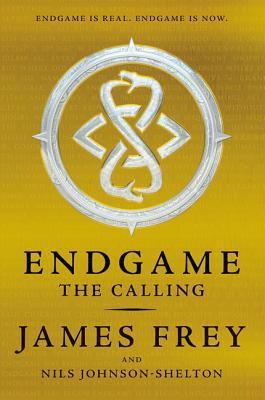
REVIEW: Endgame: The Calling - James Frey and Nils Johnson-Shelton

*COURTESY OF NETGALLEY*

I’ll deal with the controversy first; get it out of the way, and then deal with the actual book. My Twitter feed was inundated with Endgame links (which appeared to be a treasure hunt) and the promotion was crazy. In order to understand what the ballyhoo was all about (as I tend to do when wary of hype surrounding anything), I googled extensively and came across the phenomenon that was James Frey. And his Full Fathom Five. And other book packaging companies. And the faux-memoir A Million Little Pieces. I was also surprised to discover that he was one half of Pittacus Lore of The Loren Legacies fame. But more than that, I guess I was shocked (and I admit, felt a little betrayed) when I realized how much the book industry is considered a business.

I am not that person who thinks that the end justifies the means. But I am also not that person who is incapable of separating the creator from that which (s)he has created. (If I didn’t, I would not have tried The Host by Stephanie Meyer and The Mediator by Meg Cabot; both of which are reasons why I am proud of myself). Once a book has been born, it’s got a life of its own – it lives simply because it has to – needs to. The creator no longer owns it – that’s my stance anyways (that’s what Walt Whitman said too). So I made up my mind to judge this book for itself and not who and how it was written – despite my opinions on either of them.   

So, yes, we’re now getting to the book. Once I finished it and scrolled through the Goodreads reviews, I realized I wasn’t the only one who felt like the concept was a la Hunger Games deja-vu. And for good reason. The blurb sure felt like one, and ultimately that is the whole plot. Twelve tribes send in their Players (who have to satisfy the age eligibility criteria) from among which, one will emerge the winner after the bloodbath. The prize is different though. Instead of nice food and a warm hearth, you get to survive the apocalypse.

I can’t remember the last time it took me this long (a week, to be exact) to finish a book. Hell, I finished the 800-something pages of HP Book 5 within 36 hours. It wasn’t that the pace was slow, there were too many characters who were fighting for page-space. Too many to keep track of. I had over-ambitious plans for this book – I’d even registered for Endgame, because I like meself a good puzzle, but it was a chore reading this one. For each sitting, there was the initial starting trouble; there always seemed to be something better to do than read the book. I thought I was going to have to mark it a DNF. It’s not very professional of me to admit this, but I can’t guess at the reason why – too many characters and the personal drama that ensued – maybe, yes – but that’s not good enough a reason. The narration written in the present tense (especially An’s distinctive POV) had the appropriate dramatic flair to it, which makes me wish for the movie version of it. I also unconsciously worked out some “clues” before the Players did and the victorious feeling that followed the epiphany is pretty nice. But I’m too high on the holiday cake and wine, and I can’t find it in me to figure the rest out, I just wanted to move on as quickly as possible. The book failed in its primary mission as far as I am concerned.
So I did what I do best. I took out my critic eyeglass and looked through it, treating The Calling as a book and not some treasure map. I should now mention that I didn’t like any of the characters, so there was no point in asking who I rooted for. And maybe that was intentional, I mean hello, they had been trained to kill since they were born. So a more valid question would be who I hated the least. The one character that I sympathised with dies in the end, and another one that I thought kicked some butt also kicked the bucket. The mortality rate is worrying, but only predictably so. I also detested the Christopher-Sarah-Jago dramaction going on. It was pretty hard to not judge them.
Then the author inaccuracies turned up. I have lived in Dubai for close to two decades and I didn’t realize that sandstorms were this popular here. I mean, wherever did Mission Impossible: Ghost Protocol get that idea too, eh? Dubai also doesn't allow boyfriends and girlfriends to share a hotel room, someone please tell that to Kala and Christopher. Also, the Harappan, Shari Chopra (who is seventeen years old), already has a kid named Alice (which sounds pretty Christian to me) with her husband Jamal (which is a popular Muslim name). The circumstances that could have led to such a family are remote – especially if she was trained in the family – which is obviously upper caste –  who would have married her off only after she was at least 18, and that too, to another Hindu boy. She couldn’t have eloped; not if she was a Player.

But let me put this right. This is a good read. I have a feeling that maybe it was supposed to be as good and un-put-downable as a Dan Brown thriller and for reasons inexpressible, it didn’t make that cut, but comes close enough. There has evidently been a lot of research done and sleep sacrificed and I acknowledge that. And the talent required to handle these many characters simultaneously, giving them individual voices, is laudable.


VERDICT: 3 STARS

Monday, December 8, 2014

REVIEW: After The End - Bonnie Dee


*COURTESY OF NETGALLEY*

I have defined myself a reading comfort zone, much like any bookworm I know. And I have put up NO ENTRY TRESPASSERS BEWARE OF SCATHING REVIEWS signs all over its perimeter for any genre that doesn’t meet the eligibility specifications.

I have a “thing” against contemporary horror, be it movies or books – I hated Goosebumps when I was younger and the last horror movie that I saw till the credits rolled in was The Ring (it was not even in English and that shitty movie still managed to scare the pants of the poor seventh grader me). Even now when people ask me my favourite horror movie, I scoff and snort and say it’s against My Principle. Only people who know me best know it’s because even my fourth grader cousin can still manage to make me scream when she says BOO out of nowhere.

And we’re back to the main story after that bit of prerequisite knowledge.

I wasn’t blind. I did read the blurb before I started reading this book and I knew it was all about a zombie apocalypse. ZOMBIES. And somehow I also knew that this was going to be different from Warm Bodies (which I loved – YOU GO R) and I thought –


I needed to take risks. I needed to get out of my comfort zone. SO SHOULD YOU (if you haven’t done already).

Again. Back to the main story. (SERIOUSLY. GET A HOLD OF YOURSELF, A)

This book is a How To Survive A Zombie Apocalypse For Dummies reference book for your survival kit in preparation for Doomsday. It had a methodical style of narration, treating the plot as a case study for some zombie apocalypse drills, in case you wanted to try it. And I actually didn’t have a problem with that – I even admired it for not over-dramatizing it. And there were plenty of rational observations here and there – like ‘how people have a tendency to cling to something while the world fell apart’, how people automatically look for authority when they are in shock and don’t know how to deal with it, and how the possibility for sexual tensions developing between two people is still an inconvenient reality to be reckoned with – after all “A person would cling to any flotsam after a shipwreck”.
It was evident that every detail had been taken care of – whenever the suspicious critic reared its ugly head, that point would be justified quickly. For example, I was beginning to seethe about how the impromptu band of survivors had quickly divided themselves into the stay-at-home-females cooking and home-making, while the men went out for the hunting and raiding and Lila observed how the “gender roles reared their ugly heads in a crisis” and I was happy again, because it was a conscious plot development rather than a prejudiced one, and the most important – dealing with Survivor’s Guilt.

Of course, there were a lot of “Bleargh” personal moments in response to some cliché dialogues and cheesy love declarations, and they were soon followed by another character’s observation that I was indeed right.

But then, the third-person POV really pissed me off at times – whenever it cast a certain character in a negative light. If it was first-person, it wouldn’t have been a problem since the judgement of a character could be chalked up to his judgemental charcter. But when third-person is used, the judgement reads like a fact, and then it feels like the reader isn’t allowed to have an alternate opinion of that character.
Which sucks. Because as far as I know, even “bitchy sluts” care about someone.


VERDICT: 3.5 stars

Saturday, November 8, 2014

REVIEW: Imitation - Heather Hildenbrand

*COURTESY OF NETGALLEY*

This book is a well-written piece of literature. I can’t find it in me to fault the writing. The plot was paced out perfectly by giving extra attention to fleshing out every character. Titus Rogen came across the villain with the dark murky past. Marla, whose notes sent to Imitations in Twig City is the sort of character you can’t judge till after you have finished the series. Ida and Lonnie are the sort of people you want in your support group. Daniel is …
View the blurb on Goodreads

I'm not spoiling, you.
Imitation climbed the plot arc mountain with finesse. I stayed up till after midnight to climb down from the conflict plateau.
I liked Ven’s voice – brave with a side of scared. Although there is insta-attraction featured here, it’s justifiable – since it would have been the natural course for any girl in Ven’s shoes. Because, hey when you have a character like Linc Crawford who is a hybrid between Four in Divergent (both the Pre – and Post – Tris versions of him) and your average everyday awe-inspiring biker dude (see what I did there?), you really can’t help but forgive her, especially when we know that she hasn’t seen that many Y-chromosomes in Twig City.That being said, what sets this book apart from the other dystopian books?

The Imitation Club: “We have CLONES”

Uh. Orphan Black is way too amazing. I didn’t find Book One compulsive enough to induct me into the Imitation Club. I also don’t think I will pick up Book 2 unless I find it lying around within an arm’s reach. It was a good read (I didn’t feel like I was subjecting my eyes to torture or killing time pointlessly), but not great enough.

How helpful was that, eh? I can’t pinpoint out exactly what made it short of a Great Enough Read. Maybe I’m suffering from the Too Much Dystopian Syndrome and everything just feels the same.

VERDICT: 3 stars

… And An Announcement

Okay. There isn’t a better way of saying this. I am going to take the rest of the month off my blog. Reasons:


EXAMS. And this isn't even nearly whole pile.

Oh yes. Only an overly ambitious fool like me would decide to participate in NaNoWriMo when she has her semester-end exams as well. Just. Bear with me, alright?

What do you have to look forward to? In December, I am going to post some fabulous reviews of some fabulous ARCs I received (thanks Netgalley!) and some posts from when my mind was high on coffee and all things nice.

Friday, October 31, 2014

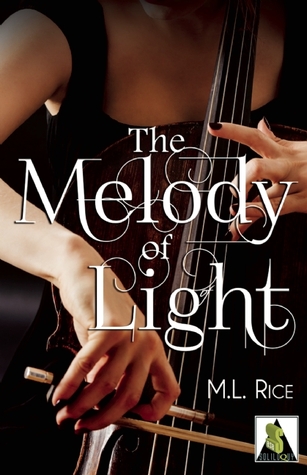
ARC REVIEW: The Melody of Light - M. L. Rice

*COURTESY OF NETGALLEY*


You know what it was about this book that took my breath away? Had this plot arc originated in my head, I would have it written the exact same way. That doesn’t mean I loved this book to the ends of the earth and depths of hell, no. I just shared a fun fact with you.
Allow me to paraphrase: I don’t really like the way I write (with regards to a full-fledged novel) and I’m still trying to find my voice. But hey, tomorrow NaNoWriMo’s beginning, and I’m living in eternal hope.

Moving on.

Since I started with the writing style of this book, I might as well get over with it. I liked it (yay!) but didn’t love it – it felt like a really long short story. There was a prologue-ish sort of intro to the first chapter, and then the plot continues in a very thespian fashion – the whole novel is a flashback that brings the book to a full circle. The third person narrative brings in the drama-esque flair to the novel.  Only Aidan and Beth and to an extent Tori and Koji are actually fleshed out satisfyingly well; the others were merely acting their parts, and I couldn’t get a read on them. Maybe that’s the way it was intended to be, so no major judgement there. 

And The Melody of Light.You have no idea how much I’ve been berated, damned, harangued for my instinct to assume everything is crap and then search for proof that it’s good and find it and only then like it. So obviously, I mistrusted the title’s seemingly overly pandering title, until – wait for it – I found the reason to like it (and that reason made me go “Oh!”). I love the title now.

Riley and Beth make a very realistic couple (not that I have any idea about the mechanics of lesbian couples, but these two rock the mechanics of a general realistic couple – I suspect that’s the author’s experience working out the finer details there). There is no shortage of soppy dialogues and everyone knows it (at one point Riley appoints Beth as the “beacon of light” in her dark life and then says, “it’s cheeseball, but true.”) But, I didn’t cringe at them, since they made sense. (Although I do wish they could have been phrased in a way that wasn’t cheeseball-ish.)

And Aidan. AIDAN. I could write poems and epics glorifying his name. He is the combination of what all the Weasley boys are (yes, I use present tense, I refuse to accept Fred’s dead, okay?) to Ginny, he is the Atticus and Jem double combo to Scout, he is the Darry and Soda to a (okay, forgive me) girly- Ponyboy. He ticks every box of “Are you the Perfect Older Brother to Problematic Sister?” and I LOVE him. Don’t worry, my feelings are very chaste and sisterly.

And then the ending happened, which should not have made me leak two tears because:
a) Hello, I read Chapter One, so I should have predicted this.
b) It gave me a la “Roth Was Trying To Create A Sensation When She Killed Off Tris In Allegiant” deja-vu. 
You know, when we are speaking of unnecessary deaths in YA-famous literature and all.

On that note, Happy Halloween people. I am virtually celebrating a Hollywood-Glorified-Almost-International-Observance-Because-India-Doesn’t-Effing-Observe-One. 
Can you see my Hermione Granger costume through that screen of yours? I treated myself with a laddoo, so ha.


VERDICT: 3.5 stars

Thursday, October 9, 2014

ARC REVIEW: Puppet - Pauline C. Harris

*COURTESY OF NETGALLEY*

(Blurb from Goodreads) Penelope lives in a world of advanced technology but many claim society has yet to catch up. Marionettes have advanced in the form of robots; lifelike creations remote controlled to perform super human tasks.

When Penelope makes a deal with Jed, a marionette-obsessed scientist, she doesn’t fully realize what she’s getting herself into. In order for Jed to take her away from the orphanage she lives in, she must first agree to undergo his experiments and tests, ultimately creating something no one ever dreamed possible; the first living marionette.

As Jed shows off his scientific creation to the world, concerns arise surrounding Penelope’s abilities and what she’s capable of doing. Ordered to somehow lessen her abilities, Jed makes a desperate attempt to change Penelope to make her more human, more vulnerable. After Penelope lies to the officials about her past, Jed makes sure it’s the last one she’ll ever utter. The truth is now the only thing she is capable of telling.

As Penelope struggles with her past, her disturbingly new present, and her uncertain future, she is thrust into a magically twisted world of mayhem in search of the one thing she wants, but knows she can never have. The chance to be just a girl again. To be normal. To be real.

Retellings are literary remixes. I have limited experience in them because my basic instinct is to distrust them. Music remixes rarely top the original for me. Film remakes are bigger disasters. As far as literary retellings go, they can be MINDBLOWING (Across a Star-Swept sea – The Scarlet Pimpernel remix), or “hmm, that was nice” (Towering – Rapunzel remix) or FAIL (Puppet – Pinocchio remix apparently)

If this wasn’t being advertised as a Pinocchio retelling, I could like it more. Because this book deserves it, trust me. I even liked the cover (SURPRISE! the book cover nazi approves). I loved Pen’s voice – she sounds like a closet philosopher, wondering about the secrets of marionettes and trying to figure out humans. The book wasn’t crowded with characters, and within very few pages, Harris manages to fledge out the main characters satisfyingly – not just the Boy and the Girl. The pacing, although it started out slow, quickened up and before you know it, you’ve reached The End. However, that might also be due to the plot lacking masala.

Let’s still pretend this book’s got nothing to do with Pinocchio. Thankfully, there isn’t much infodumping happening, but I also couldn’t get how dystopian the Portum is – I couldn’t see much advancement technology-wise other than the marionettes and a government with the Head Devere and administrators. And I kept getting confused with Pen’s brief instances of sheer stupidity.  


That’s where the tagline “Pinocchio retelling” comes in. When Pen lied about her background to the freaking government which is famous for its meddling in everyone’s affairs, I couldn’t believe Pen – my cousin swears she saw me making a face at the book. Then I remembered A Pinocchio Retelling and his lying problem. When he did it, it wasn’t unnecessary or unbelievable; the context here made it a total fail.

Where else did Pinocchio come in picture? Whenever the word “marionette” was mentioned. And Jed is the Portum version of Gepetto.  That’s the end of Pinocchio references.

When I reached The End, I felt conned.  There was no NOSE ENLARGEMENT. There was no Fox or Cat or Fairy or any talk of money, unless they have been disguised under heavy metaphors (in which case I apologize for my under-sight). If you’ve read the original tale of Pinocchio, you have no reason to read this book.

Wow, that sounds cold. But if you ignore the “Pinocchio retelling” tagline, there’s a chance you will like this book.


VERDICT: (It actually pains me to say this) 2 stars

Tuesday, September 16, 2014

ARC Review: Ghosting - Edith Pattou

*COURTESY OF NETGALLEY*

(Blurb from Goodreads) On a hot summer night in a Midwestern town, a high school teenage prank goes horrifically awry. Alcohol, guns, and a dare. Within minutes, as events collide, innocents becomes victims—with tragic outcomes altering lives forever, a grisly and unfortunate scenario all too familiar from current real-life headlines. But victims can also become survivors, and as we come to know each character through his/her own distinctive voice and their interactions with one another, we see how, despite pain and guilt, they can reach out to one another, find a new equilibrium, and survive.

Told through multiple points of view in naturalistic free verse and stream of consciousness, this is an unforgettable, haunting tale.


From page one, you get the idea that you are not in for an ordinary narrative style. At first I thought it was some formatting blunder; but I read on (sheesh I’m so stupid) and I thought, “Whoa, this is some blessed blunder, the plot makes more sense this way”, but I’m not so stupid – this thought was immediately followed by the realization that it was intended this way.

You know life? Like how it’s happening for more than one person, and for that person (s)he is its protagonist? Ghosting applies that into its narration, everyone gets a chance to tell a part of the story as they see it; everyone including the doomed kids, the kid who doomed other kids, and the police chief who has the highlight of his career. From POV 1 you think this guy is the bad guy, then his POV starts and you think okay maybe he’s not so bad, and then another POV starts and you scratch your head.

But that’s not all. The narrative isn’t prose. It’s not very poetic (which if it had been would have made me run around hugging this book), but it’s structured like one epic poem. It feels like how Virginia Woolf experimented with The Waves (although that was poetry which was NOT structured into a poem, which was a DNF for me; the plot moved so so slow, glad you asked). And everyone takes on a different voice when it’s their turn – Chloe with POVetry titles, Felix with his weed supressed ADHD who doesn’t even bother with breaking down the prose, Faith with her short and sweet sentences, and such. You become fond all these kids.

The plot isn’t OUTSTANDINGLY outstanding or something, but the narration and its characters make it into something that you want to finish within one sitting.

VERDICT: 3.5 stars

Saturday, August 23, 2014

ARC Review: The Before Now and After Then - Peter Monn

*COURTESY OF NETGALLEY*

The book started by ticking all the boxes in my checklist to like a book - intriguing title, intriguing cover, interesting shelves, and above all, an interesting premise.
(Blurb from Goodreads)
Danny Goldstein has always lived in the shadow of his identical, twin brother Sam. But when a hurricane of events forces him into the spotlight, he starts to realize that the only thing he’s truly afraid of is himself. With the help of his costume changing friend Cher, a famous gay uncle with a mysterious past of his own, two aging punk rocker parents and Rusty, the boy who will become his something to live for, Danny begins to realize that the music of the heart is truly the soundtrack for living.
Danny Goldstein is broken after his twin dies on a night that was a tragedy among tragedies. Sam was the fighter. Danny walked in his shadow - Sam was his safe house. Their room reflected Sam from its furnishings. “Just an outline of the picture, giving some definition but not really filled with any kind of personality”. Even before Danny told him he was gay, Sam already knew. Like only a twin knows. So when he dies, “broken” isn’t a dramatic word. The first few chapters also strengthened my belief that I was going to love this book.

As you can guess from my phrasing of the introductory paragraph, that didn’t happen.

The book starts with a paragraph from a made up book that I wished would exist so I can read it.

(I can’t include the entire paragraph for obvious reasons.)

But this sentence is enough to describe all the characters here – Danny, Cher (GOD CHER DESERVES HER OWN FUCKING BOOK), Rusty, Alex (author of the famous Suburban Wasteland which I want to read) – all of them. As I am introduced to the characters, (Cher just jumps off the page like an effing page can’t hold her back), I start falling for this book. Danny sounds scared and lost, Cher hides all her insecurities under the fandom of her namesake, purple hair, and a ton of “I’ll maim you” attitude, brave Rusty with his fears, and Alex sounds like the cool, gay, honorary uncle. I liked them all and the direction in which the plot was taking me. (I like depressing premises if you didn’t already catch that).

And then


There was so much cheesiness and an overload of soppy dialogues; I kept wincing all throughout the middle. There was a lot of moons, and flowers and one-week anniversaries. I mean they’re gay, not girly girls right? Major stereotype revision happens here - so I guess I should be happy.
(This was my moment of revelation actually. Since my LGBT knowledge is limited to reel life, I thought gay men can be manly – LIKE FREAKING MATT BOMER AND WENTWORTH MILLER – and here Danny and Rusty was slathering me with cheese.) If all this happened in a straight book I would not forgive it, so same applies here.

And then life started to get complicated like it couldn’t bear to see Danny happy and then my cousins were very amused at my “Oh God” expressions and gasps.
So, that’s speaking plot-wise.

The writing pleased me (I am deliberately not including the cheese pizza slices), but it didn’t unbalance me or anything. And the coming-out phase happens at the very beginning of the book, so thankfully the whole story was not about accepting his gay-ness (ok, it is, but not outright). But this is a romance when all is said and done (which is not what I thought it would be) and romances don’t inspire me that much, so -
VERDICT: 3.5 stars.

Cher deserves pompoms though. I loved her.
Ooh, I just remembered why the talk of cassettes and B-sides gave me deja-vu. See Beautiful Music for Ugly Children. 

Wednesday, August 13, 2014

ARC Review: Since You've Been Gone - Mary Jennifer Payne

*COURTESY OF NETGALLEY*

There I was browsing the titles on Netgalley when I saw a book with a Kelly Clarkson song as the title and I'm so ready to skip it (not because I hate the song - God forbid) when I accidently read the blurb.

(Blurb from Netgalley) Is it possible to outrun your past? Fifteen-year-old Edie Fraser and her mother, Sydney, have been trying to do just that for five years. Now, things have gone from bad to worse. Not only has Edie had to move to another new school — she's in a different country.

Sydney promises her that this is their chance at a fresh start, and Edie does her best to adjust to life in London, England, despite being targeted by the school bully. But when Sydney goes out to work the night shift and doesn't come home, Edie is terrified that the past has finally caught up with them. 

Alone in a strange country, Edie is afraid to call the police for fear that she’ll be sent back to her abusive father. Determined to find her mother, but with no idea where to start, she must now face the most difficult decision of her life.

So as Netgalley kindly informed me, the titular "you" is not some useless ex, but the heroine's mother. I wanted this.

Edie is scared of some "him". She has a lot more to deal with than your average hormonal teenager - which includes a lot of moving around, no stability and living in constant fear. Her mom is the only constant in the equation of umpteen variables. And if she goes missing, I can only imagine how much Edie has gone through.

Now there's the problem. Edie doesn't seem to be suffering from severe heartburn. Even though it's narrated in first person the trauma that she's going through doesn't come across convincingly. She waited for more than the recommended number of days to physically start the "Searching for Missing Person".

 "I'm beginning to realize that finding Mom in a city as massive as London is going to impossible without some sort of miracle."

I get her reasoning and the practical limitations, but wouldn't YOU move heaven and earth to get your mom back as soon as possible?

And the hero enters in a tried-and-tested fashion (more details? read the book) and offers to join the one-woman search party. And you know what she does when he turns up at the door? Instead of leaping outside, she went back into her room, applied makeup and admired her curves.

I appreciate the fact that there are PoC characters, but I got pissed when I realized Edie's new friend Savitri is a Muslim (FYI, there are no Muslim girls named Savitri). And there is a lot of A-Z London happening as well (Edie, News Flash: YOUR MOM'S MISSING STOP SIGHT SEEING ).

And then there was some out of the blue make out session and I'm like:
(Shoot me now, please)
I like the fact that the book features a sort of patchwork quilt of less documented side of life (everyday racial prejudice, foster parents for a day) but these come with the bonus of seemingly random complications.

VERDICT: 2 stars

Friday, July 18, 2014

ARC Review: Darkness - Erin Eveland

(Blurb from Goodreads) One Girl. One Boy. And the Masters of Darkness. See the Shadow Creatures. They are everywhere. But you can't run from the shadows or the Masters who control them.

Catherine has been born with a supernatural power called Darkness. The Masters of Darkness have found her and it's just a matter of time before someone claims her.

*COURTESY OF NETGALLEY*

I really don't know how to classify my feelings about this book (What. A. Surprise.)

The first thought to puncture my skeptical brain is, "Whoa, this book is verbose." Since this book is officially YA, the language used in the initial pages fooled me into thinking the story was set during a time when people used a vocabulary far more extensively than today. I was wrong - I found that some chapters later. The plot concerns the parnormal and the philosophical aspects of (um, because my brain can't puke out a better word) magic - which works alright. I ususally fall in love with anything parading as philosophical content but this one didn't seduce me.

Catherine deserves everyone's sympathy - theoretically.
That was the problem.
The writing is "incredible" - my grammar and poetry skills have improved a notch - but it's aloof. "Incredible", because it's only technically so.
Maybe it's because of the third person narrative (but I know a lot of books written in third persn that I ADORE) but I just couldn't reach out to the characters. They felt like some actors in a play who are technically fulfilling, but somehow couldn't involve the audience. The book had an overall thespian effect. Which usually always awes me - but this one didn't.

The book is ... interesting. (Read that sentence in an undecided voice). It's definitely good for a first time read, and also for the curious, insatiable bookworm.
And yes, it is YA, but there is some adult content so teenage initiates, beware.

VERDICT: Technically (this is the third time I am using this word in this post) this book deserves a 3.5 stars, but this book lacks (dear brain cough up some word to explain what I'm feeling) soul. So 3 stars.

NOTE: See the footer "An Interactive Novel"? There were links at the beginning of each page to mood setting audio but because of non-existent wifi facilities - yeahn not very interactive for me.

Sunday, June 1, 2014

ARC REVIEW: Deep Blue - Jennifer Donnelly

*COURTESY OF NETGALLEY*

Mermaids. What sort of picture does that word draw in your head?
The seashell bra clad mermaid, courtesy of Disney?


Or the one baring sharp incisors and pointing spears at you, courtesy of J. K. Rowling?


I will not quote the Goodreads synopsis or write one of my own, because I tried and it sounded like the one on Goodreads anyway – which I hated because it made me not want to read the book. It sounded all girly (excuse the reference to the stereotype) and romance-y with some conflict thrown in for the sake of. So why did I read the book?

Because I trusted Jennifer Donnelly after reading Revolution (three cheers for historical fiction). If you haven’t read it, fix that blunder pronto.

Serafina does not wear a bra of seashells (or if she does, it's not mentioned).The lifestyle of the merpeople in Miromara closely resembles the Disney version, albeit a better one.  She’s the principessa of Miromara, and a descendant of Merrow, the much revered first ruler of the mermish kingdom. We meet her on the day of the Dokimi, when she’s declared of the blood of Merrow. If she isn’t she becomes dinner of a certain sea – spider. And if she miraculously somehow manages to survive that, she should be able to impress the merpeople with her excellent songspell abilities. And then she should take her betrothal vows. Did I mention she is sixteen?
But why all this? Qui Merrow decrivit.

That isn’t the story, by the way. AT ALL. Nuh-uh.  But if I divulge that information, you won’t get surprised by the twist in the storyline like I was. Withholding privileged information, bloggerverse.

It’s been so long, like since Harry Potter and Eragon and the Hunger Games, that I’ve come across a book with such awe-inspiring world building and conceptualizing. Merpeople have currensea, and conches to study; phrases like “put a fin wrong” and “family coral”, make pets of octopuses (ok maybe thank you, Disney), go “shoaling”, and have amazing friends like Neela (who is as important as Serafina by the way – GOODBYE SIDEKICKS) who keep bingeing on zeezees.

This book also flaunted POC characters that didn’t seem out of place or feel like unnecessary additions to make people happy.  The prologue was unexpected (in a very good way). The writing was the only thing that didn’t make me happy enough. I don’t know if I really liked the third person narration, I guess it was necessary for briefing the reader – but I wanted it to be more subtle, and not informational. And sometimes the narrator’s point of view switched between characters abruptly. Sometimes the language turned a tad too dramatic. 

WARNING: Do not read the Goodreads reviews criticizing the puns. *flips a fin*
I’m saying hell, yes to the Waterfire Saga anyway.

VERDICT: 3.5 stars
Add your graffiti here before you leave; this wall needs all the colour it can get. And check back, I always reply as promptly as the wifi allows me to. ;)