Showing posts with label historical. Show all posts

Wednesday, February 17, 2016

REVIEW (well, sort of): Salt to the Sea - Ruta Sepetys

*COURTESY OF NETGALLEY*

I will never get tired of reading historical fiction. Just when you think you've read enough on WWII from all angles, a book like this comes along and nudges you to look even closer to see things your so-called experienced eyes have missed.


Sepetys says that 'stories of strength through struggle' inspire her work, especially since she's the daughter of a refugee. That's what birthed this book - a successor to her Between Shades of Gray; the book that introduced me to this phenomenon that is her. She wants the world to know and remember what layers of debris resulting from the more flamboyant historical fallout, have hidden underneath and I am very much smitten with her for it.


I admit my shameful ignorance of the Wilhelm Gustloff and thank Sepetys for remedying it. But the truth is that that's not what shocked me the most in this book. What truly horrified me was not the sheer scale of the atrocity, but the less flashy, more relatable kinds of horrors, like - 


Or this - 


But I'm jumping ahead of myself. This book follows the lives of a very interesting motley of refugees. And that of one psychopath-in-training,


Initially, I was mightily creeped out by Alfred's POV accounts and dreaded his chapters. I kept questioning its purpose throughout the book and it was only towards the end that it struck me that even he needs a voice. It's not enough psychopaths like him and Hitler roared all they liked on radios and megaphones - we need to know what really went inside their heads where they were held captives so that we can give them our pity.

But back to Joana and Florian and Emilia and the Shoe Poet and the Orphan Boy and Eva and Ingrid. This is where the book triumphs in the story it is trying to tell. When humanity shines through even when all else is lost. 

So even after I've waxed eloquent about this book, I feel like I'd be lying if I won't admit that I didn't love this book to pieces like I prophesied to myself. I had the same problem with BSoG. The endings of both books left me mildly dissatisfied. This pretty much feels like blasphemy, but I'm missing out on the magic Sepetys did with Out of the Easy. Maybe she felt a pressured need to give justice to the characters in BSoG and SttS and not offend in any way, but I sense a restraint in her writing in this book, unlike in OotE. I don't want to sound pretentious - there's a 150% chance I'm wrong - I was just going out on a limb here.

The last paragraph is a personal opinion; you probably won't find it anywhere else. There's a 150% chance you'll love this book to pieces though.

VERDICT: 4 stars

Monday, October 5, 2015

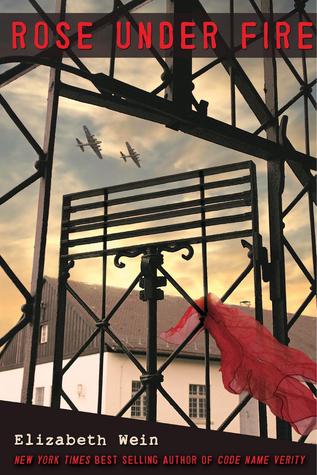
REVIEW: Rose Under Fire - Elizabeth Wein

Elizabeth Wein is a hero. If the act of merely reading her books is sufficient enough to make me feel like I’m choking on air, I can’t even imagine what’s it like for her to conceive her books in her head and bleed life into the pages with her fingers. Code Name Verity damn near killed me. The companion novel Rose Under Fire killed me. Even though CNV is not a reading prerequisite for RUF, it will help many a haplessly clueless reader ease into unfamiliar territory.  

I completed RUF some time back. At that time, I felt I was in an emotionally compromised state to write a coherent review. Deciding to put some time between the reading and the reviewing is one of my more brilliant ideas. If this book is on your TBR pile as well, you’ll know why eventually.

Anyway, being an Ignorant American Schoolgirl gives me an open ticket to ask brazen questions, and I’d already put my foot in my mouth, so I just went on.
“What is a concentration camp, Fliss?”

Given an opportunity, I have never failed to manage to squeeze in a reminder that I love historical fiction. Consequently, I have greatly taken advantage of fiction under the backdrop of the World Wars and the Holocaust, whether in print or on screen. I thought I knew what concentration camps are. I thought I knew what went on in there. I thought I was better than Rosie.

My mistake.

Rose Justice is an ATA pilot – out of America and in England, chasing her love for planes. For her, the horrors happening in Germany and elsewhere was an abstract idea – she knew people were dying and they needed saving. For her, the real tragedy lay in Doodlebug Brides and couples getting married in haste and boys fiddling with unexploded bombs in the hopes they can defuse them. Then again, she’s just eighteen years old crazily in love with flying in the sky and writing poems.

Everywhere I go I meet people who are hunting for husbands, mothers, children, brothers, sisters, cousins, friends, lovers, and they are all gone.
Your friend Rose has evaporated with them. I don’t know what else to tell you Maddie.

Then the horror accounts start. How they start by taking away your name and giving you a number. We hear about fleas who are in league with the SS. About 50,000 women locked inside a prison half a mile wide and a quarter of a mile across with no toilets. We learn of Rabbits. Our lives are changed forever.

When you lost hope, you turned into a schmootzich, one of the mindless beggars who were the bottom-crawlers of that entire scummy camp, or you died.

If you think this book is one of those books that preach nothing but morbidity and mortal moroseness in the name of empathy, you are dead wrong. This is not one of those books. This is that book that inspires awe. Awe at how much life and hope and dreams can thrive even in places that seem beyond despair.

It took me a long time to write ‘The Subtle Briar’, but it was translated into three languages in a day. Every time it got passed on I got another bread ration. Oh God, we needed something to cling to. We were scared.

The technical bits about bombs and planes, the poems and the characters are what sets the book apart from its peers. Many might feel the tech stuff is infodump but I lived for it. The Subtle Briar and Playing Statues are my favourites. Róza, Irina, Karolina, Lisette, Micheline, Elodie are my favourites. Even Anna. And Nick from the Nick stories. You will be rendered unable to label them fictional characters because of the sheer depth Wein has endowed them with, which is an accomplishment considering the number of characters this book is peppered with.

When you’re flying, the changing balance of lift and weight pulls you up and down. But another pair of forces pulls you forward or backwards through air: thrust and drag.
From Kite Flying: four principles of flight (by Rose Justice)

I think what made me love this book is the fact that there are no unnecessary deaths. (And by that, I am in no way claiming that the deaths that do happen were necessary.) I have noticed a disturbingly common authorial tendency to wantonly disregard fictional characters’ lives. Like they think killing off someone we love in our faces and the tears and heartbreak that inevitably follow is the price of loving a book. But Rose Under Fire does not resort to any such cheap tricks even though it could have and I love it all the more for it.


VERDICT: Freaking Five Stars

Sunday, December 28, 2014

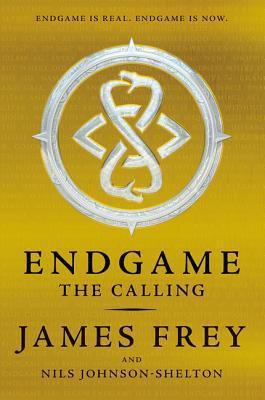
REVIEW: Endgame: The Calling - James Frey and Nils Johnson-Shelton

*COURTESY OF NETGALLEY*

I’ll deal with the controversy first; get it out of the way, and then deal with the actual book. My Twitter feed was inundated with Endgame links (which appeared to be a treasure hunt) and the promotion was crazy. In order to understand what the ballyhoo was all about (as I tend to do when wary of hype surrounding anything), I googled extensively and came across the phenomenon that was James Frey. And his Full Fathom Five. And other book packaging companies. And the faux-memoir A Million Little Pieces. I was also surprised to discover that he was one half of Pittacus Lore of The Loren Legacies fame. But more than that, I guess I was shocked (and I admit, felt a little betrayed) when I realized how much the book industry is considered a business.

I am not that person who thinks that the end justifies the means. But I am also not that person who is incapable of separating the creator from that which (s)he has created. (If I didn’t, I would not have tried The Host by Stephanie Meyer and The Mediator by Meg Cabot; both of which are reasons why I am proud of myself). Once a book has been born, it’s got a life of its own – it lives simply because it has to – needs to. The creator no longer owns it – that’s my stance anyways (that’s what Walt Whitman said too). So I made up my mind to judge this book for itself and not who and how it was written – despite my opinions on either of them.   

So, yes, we’re now getting to the book. Once I finished it and scrolled through the Goodreads reviews, I realized I wasn’t the only one who felt like the concept was a la Hunger Games deja-vu. And for good reason. The blurb sure felt like one, and ultimately that is the whole plot. Twelve tribes send in their Players (who have to satisfy the age eligibility criteria) from among which, one will emerge the winner after the bloodbath. The prize is different though. Instead of nice food and a warm hearth, you get to survive the apocalypse.

I can’t remember the last time it took me this long (a week, to be exact) to finish a book. Hell, I finished the 800-something pages of HP Book 5 within 36 hours. It wasn’t that the pace was slow, there were too many characters who were fighting for page-space. Too many to keep track of. I had over-ambitious plans for this book – I’d even registered for Endgame, because I like meself a good puzzle, but it was a chore reading this one. For each sitting, there was the initial starting trouble; there always seemed to be something better to do than read the book. I thought I was going to have to mark it a DNF. It’s not very professional of me to admit this, but I can’t guess at the reason why – too many characters and the personal drama that ensued – maybe, yes – but that’s not good enough a reason. The narration written in the present tense (especially An’s distinctive POV) had the appropriate dramatic flair to it, which makes me wish for the movie version of it. I also unconsciously worked out some “clues” before the Players did and the victorious feeling that followed the epiphany is pretty nice. But I’m too high on the holiday cake and wine, and I can’t find it in me to figure the rest out, I just wanted to move on as quickly as possible. The book failed in its primary mission as far as I am concerned.
So I did what I do best. I took out my critic eyeglass and looked through it, treating The Calling as a book and not some treasure map. I should now mention that I didn’t like any of the characters, so there was no point in asking who I rooted for. And maybe that was intentional, I mean hello, they had been trained to kill since they were born. So a more valid question would be who I hated the least. The one character that I sympathised with dies in the end, and another one that I thought kicked some butt also kicked the bucket. The mortality rate is worrying, but only predictably so. I also detested the Christopher-Sarah-Jago dramaction going on. It was pretty hard to not judge them.
Then the author inaccuracies turned up. I have lived in Dubai for close to two decades and I didn’t realize that sandstorms were this popular here. I mean, wherever did Mission Impossible: Ghost Protocol get that idea too, eh? Dubai also doesn't allow boyfriends and girlfriends to share a hotel room, someone please tell that to Kala and Christopher. Also, the Harappan, Shari Chopra (who is seventeen years old), already has a kid named Alice (which sounds pretty Christian to me) with her husband Jamal (which is a popular Muslim name). The circumstances that could have led to such a family are remote – especially if she was trained in the family – which is obviously upper caste –  who would have married her off only after she was at least 18, and that too, to another Hindu boy. She couldn’t have eloped; not if she was a Player.

But let me put this right. This is a good read. I have a feeling that maybe it was supposed to be as good and un-put-downable as a Dan Brown thriller and for reasons inexpressible, it didn’t make that cut, but comes close enough. There has evidently been a lot of research done and sleep sacrificed and I acknowledge that. And the talent required to handle these many characters simultaneously, giving them individual voices, is laudable.


VERDICT: 3 STARS

Thursday, May 29, 2014

REVIEW: Prisoner of Night and Fog - Anne Blankman

Gretchen Muller is the daughter of a man who died to save Adolf Hitler. The daughter of a sainted martyr. Even when no one else understood her, Uncle Dolf was always there for her. He taught her music and art, he told her about the sacrifices one must make for their fatherland. Gretchen understood completely, she was the perfect Aryan. But one day, a chance meeting with the Jewish reporter Daniel Cohen forces her to question her beliefs. And she has to confront another question, the most disturbing of all – could Uncle Dolf have another face?

I must not have stressed this point enough – but I love history. So throw anything at me with tags like war, Holocaust, civil rights, and I will catch.

Books I’ve usually read dealt with the Holocaust, or was set during WWII. So this book enticed me the way shiny things attract a magpie. Hitler isn’t chancellor of Germany yet, he’s a politician and the leader of the National Socialist Party. And I ask you, how many books dared to cast Hitler as a character in a fictitious story?

I have exams going on and the fact that I finished this book in two sittings is testament enough to the engrossing plot. People could say, “Well obviously, it’s just some fictitious characters woven into the actual story – that’s not very original”. True.  But there is a lot of skill involved in writing this book. Manipulating a real piece of history to serve as a background for her basic plot starring Gretchen is challenging. As far as you and I are concerned, this is a compelling story, one we could have come across only if we were history students. I don’t do twofaced things like condemn a book that I enjoyed because the complete storyline wasn’t born out of the writers’ minds. I mean, has no one got a problem with Shakespeare?

Casting someone like Hitler whose personality is treated as a case study by psychologists takes nerve. And we get the image of a loving uncle along with that of the psychopath he actually is, we get another angle to look at the short man. How he used mere words to start a war. 

Then there is Gretchen and Daniel. Maybe the circumstances in which they met were a bit too deliberate, and maybe they moved onto the ship a bit too quickly – but I’m grateful because that would have meant stretching the story. All the characters in this book felt like they had their own stories. Their development must have taken a lot of pain, especially Reinhard’s (read, and you’ll know who and why).

But.

The writing was very dull. There could have been a lot of German woven into the writing, but there is none, save for the “Fraulein's” and “Herr's” and the occasional “Heil Hitler's”. The writing style was simply a medium to tell the story, nothing more. And the world building involved could be likened to that found in a history textbook – this is where he lived, that is where she danced, this is where he was killed.
But this is a really good story, trust me. Shame on you if you pass up on this one.

VERDICT: 3.5 stars


P.S. – This one is a series, you hear? *rubs hands gleefully*
Add your graffiti here before you leave; this wall needs all the colour it can get. And check back, I always reply as promptly as the wifi allows me to. ;)